Understanding the HYSA Landscape: Beyond the 0.01% Trap
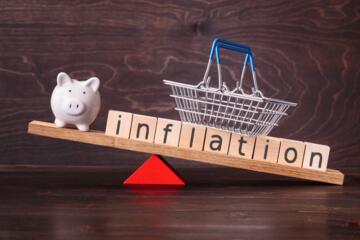
Most consumers remain tethered to "Big Four" banks—JPMorgan Chase, Bank of America, Citigroup, and Wells Fargo—where standard savings rates often linger at a dismal 0.01%. In practical terms, keeping $10,000 in a traditional account nets you exactly $1 in interest after a full year. This isn't just a missed opportunity; it is a financial loss when adjusted for a standard inflation rate of 2% to 3%.
A High-Yield Savings Account is typically offered by online-only banks or digital arms of established institutions. Because these entities lack the overhead of physical branches, they pass the savings to the customer. As of 2024 and heading into 2026, top-tier HYSAs have consistently offered rates between 4.25% and 5.25% APY (Annual Percentage Yield).
For example, a $25,000 emergency fund in a 4.50% HYSA generates approximately $1,125 in annual interest. In a 0.01% account, that same money generates $2.50. The difference is not just "extra pocket money"—it is a monthly utility bill or a significant contribution toward a vacation funded entirely by the bank’s interest payments.
The Cost of Inertia: Why Your Savings Are Stagnating
The primary pain point for savers is "loyalty friction." Banks rely on the fact that moving money is perceived as a hassle. Consequently, billions of dollars sit in legacy accounts, losing value every day.
Another critical issue is the "teaser rate" bait-and-switch. Some institutions advertise a high rate that expires after three months, reverting to a baseline rate that is lower than the market average. Without active monitoring, savers lose their edge.
Furthermore, many people confuse HYSAs with Money Market Accounts (MMAs) or Certificates of Deposit (CDs). This lack of clarity leads to liquidity issues—such as locking money in a CD and facing penalties when an emergency arises—or missing out on the higher rates of an HYSA because they chose a low-yield MMA with a debit card they don't actually need.
Strategic Implementation: How to Maximize Your Yield
To effectively use an HYSA, you must move beyond simply opening an account. You need a structured approach to liquidity management and rate optimization.
1. Optimize for Compound Frequency
Ensure your chosen bank compounds interest daily and credits it monthly. This maximizes the mathematical advantage of earning interest on your interest.
-
Provider Examples: Ally Bank and Marcus by Goldman Sachs are industry standards for clean interfaces and reliable daily compounding.
-
Result: Over a 5-year period, daily compounding on $50,000 at 4.5% yields roughly $200 more than annual compounding.
2. The "Hub and Spoke" System
Keep your primary checking account at your local bank for ATM access and immediate bill pay (the Hub). Link it to an external HYSA (the Spoke).
-
Why it works: It creates a psychological barrier to spending your savings while maintaining a digital bridge for 1–2 day transfers.
-
Service Recommendation: Use Capital One 360 Performance Savings for a balance of high rates and a robust mobile app that integrates well with external transfers.
3. Rate Chasing vs. Stability
Don't switch banks for a 0.05% difference. Look for "Rate Leaders"—banks that historically stay in the top 10% of offerings.
-
Top Contenders: SoFi (which often requires a direct deposit for the highest rate) and Wealthfront (which offers a "Cash Account" that functions like an HYSA with even higher liquidity).
-
Fact: Wealthfront currently utilizes a network of partner banks to provide up to $8 million in FDIC insurance, far exceeding the standard $250,000.
Real-World Case Examples
Case 1: The Emergency Fund Optimization
Individual: Sarah, a freelance graphic designer. Problem: Kept $30,000 in a traditional savings account at a local credit union earning 0.15% APY ($45 annual interest). Action: Moved the full amount to a UFB Direct Secure Savings account at 5.25% APY. Result: Her annual interest jumped to $1,575. This essentially covered her professional software subscriptions and hardware insurance for the entire year.
Case 2: The House Down Payment Strategy
Couple: Mark and Elena, saving for a home over 24 months. Problem: They had $80,000 in a checking account, worried about market volatility in stocks. Action: Deposited the $80,000 into a CIT Bank Platinum Savings account. Result: Over two years, at an average rate of 5.00%, they earned over $8,200 in interest. This covered their closing costs, which they originally thought they would have to save for separately.
HYSA Selection Checklist: What to Verify Before Opening
Use this checklist to vet any potential bank. If they fail more than one point, look elsewhere.
-
FDIC/NCUA Insurance: Is the bank member-insured? (Crucial for the safety of your principal).
-
Minimum Balance Requirements: Does the high rate only apply to balances over $5,000? (e.g., CIT Bank requires $5,000 for their highest tier).
-
Maintenance Fees: Are there monthly "service" charges? (A $10 fee can wipe out the interest on a $2,000 balance).
-
Transfer Limits: Does the bank enforce the old Regulation D (6 withdrawals per month)? Many have scrapped this, but some still penalize frequent movers.
-
Inbound Transfer Speed: How long does it take for your money to start earning interest? Some banks wait 3–5 days after a deposit to start the clock.
Common Mistakes to Avoid
Ignoring the "Fine Print" on Direct Deposits: Many fintechs, like SoFi, advertise headline-grabbing rates (e.g., 4.60%) but only grant that rate if you have a qualifying direct deposit. Without it, the rate might drop to 1.20%. Always verify if your salary meets their criteria.
Over-funding the Account: While 5% is great, it rarely beats the long-term historical 10% return of the S&P 500. An HYSA is for cash you need in the next 1–3 years. Keeping your entire net worth in an HYSA is a mistake of "opportunity cost" for long-term wealth building.
Neglecting Beneficiaries: Because HYSAs are often opened online in minutes, users frequently skip the "Payable on Death" (POD) section. This forces your heirs into probate court to access the funds. Always list a beneficiary immediately upon account opening.
FAQ: What Savers Really Want to Know
Is my money as safe in an online bank as it is at Chase?
Yes, provided the bank is FDIC-insured. The Federal Deposit Insurance Corporation protects up to $250,000 per depositor, per institution. If an online bank fails, the government ensures you are made whole, typically within a few business days.
Why do rates change so often?
HYSA rates are pegged to the Federal Funds Rate. When the Federal Reserve raises or lowers rates to control inflation, banks adjust their APYs accordingly. Your rate is "variable," meaning it can go up or down at any time without notice.
Will I have to pay taxes on the interest?
Yes. Interest earned in an HYSA is treated as ordinary income. If you earn more than $10 in interest, the bank will send you a Form 1099-INT in January. You should estimate a 20–30% "tax drag" on your earnings depending on your tax bracket.
Can I use an HYSA for my business?
Most HYSAs are for personal use. However, platforms like Live Oak Bank or Bluevine offer high-yield business savings products. Using a personal account for business can lead to account closure.
How long does it take to get my money out?
Usually 1 to 3 business days via ACH transfer. If you need "instant" access, look for an HYSA that provides an ATM card or supports Real-Time Payments (RTP).
Author’s Insight: The Professional Perspective
In my years analyzing cash management strategies, I’ve found that the biggest barrier to wealth isn't a lack of income—it's "leakage." Keeping money in a low-interest account is a form of leakage. I personally maintain three separate HYSAs: one for taxes, one for an emergency fund, and one for "opportunity cash" to buy market dips. This segmentation, combined with automated weekly transfers, removes the emotional labor of saving. My top tip: ignore the marketing and look at the historical "rate floor" of a bank. If they drop their rates the second the Fed moves, they aren't your partner; they are just chasing your deposit.
Conclusion
To stop losing money to inflation today, identify your "static cash"—the money sitting in your checking account that isn't earmarked for this month's bills. Research three providers (I suggest starting with Marcus, Ally, or Wealthfront), verify their FDIC status, and initiate a $500 "test" transfer. Once you see the first month's interest hit, move the remainder of your emergency fund. This single 15-minute task can result in thousands of dollars in passive gains over the next few years.